I work a full-time desk day-job in addition to writing fiction. This means I spend 40-hours a week at at computer without including my time writing.
When I get off work, the idea of sitting at my computer for another few (or not-so-few) hours to write can be daunting purely from a physical perspective.
I posted a few years ago that working out is part of my writing process and critical to my mental health [Working Out Is Writing]. Back then, I proceeded with the usual disclaimer that I’m not a doctor. I’ll add now that you should consult a doctor or professional before starting a new workout program, and that not all stretches are good for all people, so only do what feels right for you and doesn’t cause pain.
(Yep, ^ is me)
The Why
Our bodies are meant to move. Maintaining certain postures and applying prolonged stress through repetitive motions can change the natural movement patterns of our bodies and, overtime, lead to a decreased range of motion, muscle imbalances, and pain. Much of the modern desk-dweller’s life is spent in a forward hunch, which shortens muscles in the front of the body and over-stretches and elongates muscles in the back-body. Without getting into a long anatomy lesson, I’m simply going to say that neck, shoulder, chest, arm, wrist and back pain can often start with not just poor posture but with sitting for too long.
There are so many awesome stretches, static and dynamic, to help off-set desk and computer use, but I’ve picked 5 of my favorites for when I want immediate relief for neck, shoulder, back, and hip pain.
Author blog disclaimer: The following are stretches that I (an author and desk-dweller) do myself, written out how I do them personally. There are instructional videos and images online from healthcare and fitness professionals that give detailed instruction on appropriate method and form. If any of the stretches below interest you, I recommend checking out that online content. As with any stretch or exercise, stop if it causes pain.
The Stretches
- Neck: Up/down and side-to-side neck stretches
- Wrists: Rolls and extension
- Back/Chest: Banded pull-aparts
- Spine/Back: Cat/Cow – seated or kneeling
- Hips: Standing quad stretch
Neck Stretches
I like to start with simple head nods: looking up to the ceiling (Not craning the neck back, but lift the chin until there’s a nice stretch along the front of the neck) before dipping the chin to the chest, feeling the muscles at the back of the neck stretch. I move slowly and pause for 5-10 seconds at the top and bottom of the motion, repeating the motion about 5-8 times.
Next, I do side-to-side motions, looking left and right, working within my range of motion for that day (sometimes I can’t turn my head as far in one direction). Like with the head nods, I go slowly and pause for 5-10 seconds at the end of my range of motion in both directions, repeating 5-8 times.
Lastly, standing or sitting, I reach behind me and clasp my right wrist with my left hand, look straight ahead and ‘drop’ my left ear toward my left shoulder while continuing to hold my wrist wrist. When I do this, I feel a stretch along the right side of my neck and, sometimes, down into the top of the shoulder area.
I’ll hold this for 5-10 seconds, then return my head to a neutral position before releasing my wrist and repeating on the other side, this time gripping my left wrist with my right hand this time, and tilting my right ear down towards your my shoulder.
For a less intense stretch, place your hands on your knees or keep them at your side while you do the same head movements.
I typically do 2-5 rounds.
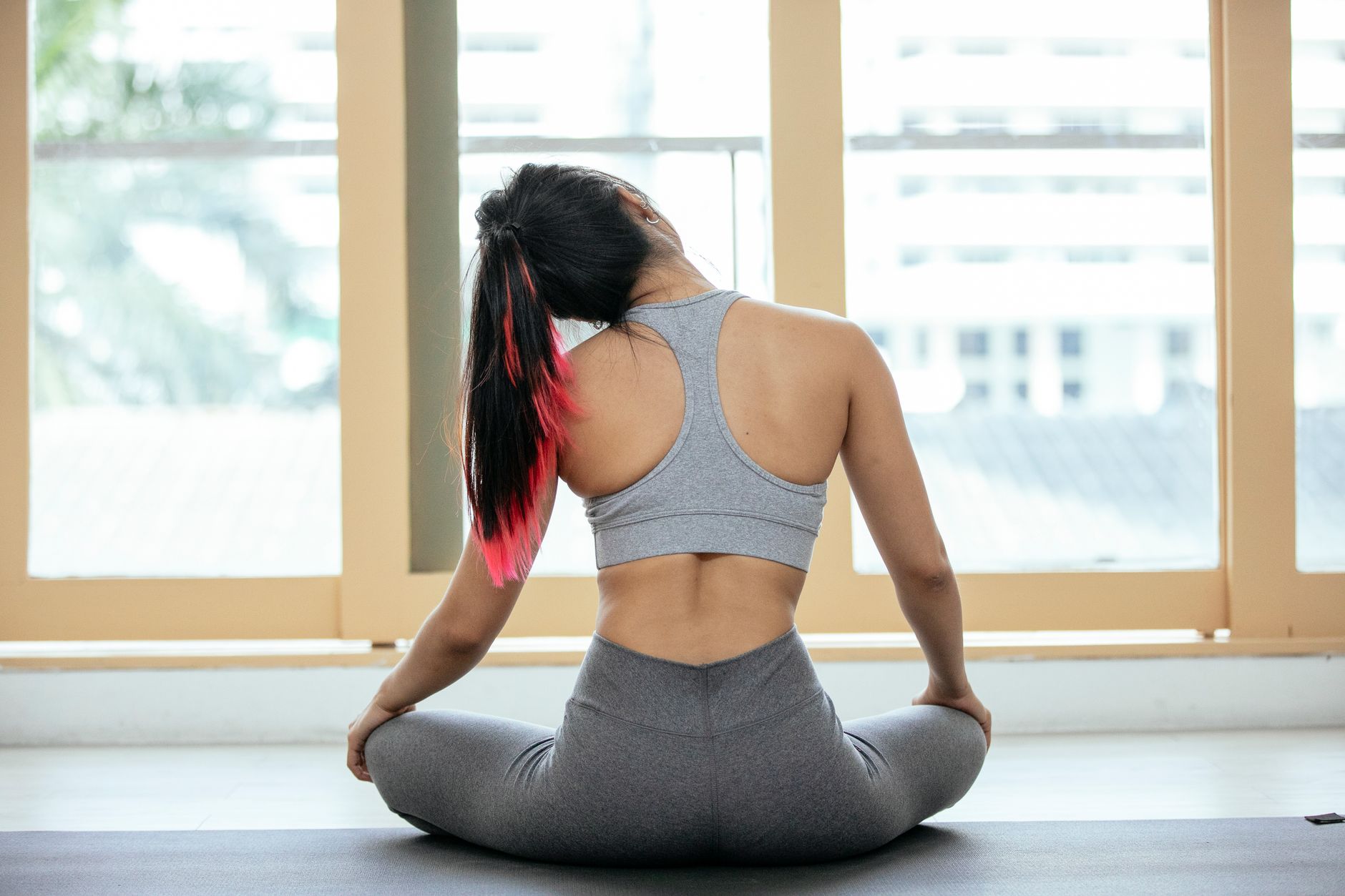
(^ not me)
Rolling Wrists and Wrist Extension
Throughout the day, I’ll take a break to roll my wrists one direction and then the other. There are several ways to do this. They’re all great at restoring some movement to the joint.
Typing puts our hands in a forward claw-like position for long periods of time. This can impact the body all the way up through the shoulders and back. To counter-act this position, I form fists with my hands and then opening my hands and spread my fingers as wide as I can (like jazz-hands). I’m always surprised by how much of a stretch this is for my tired fingers.
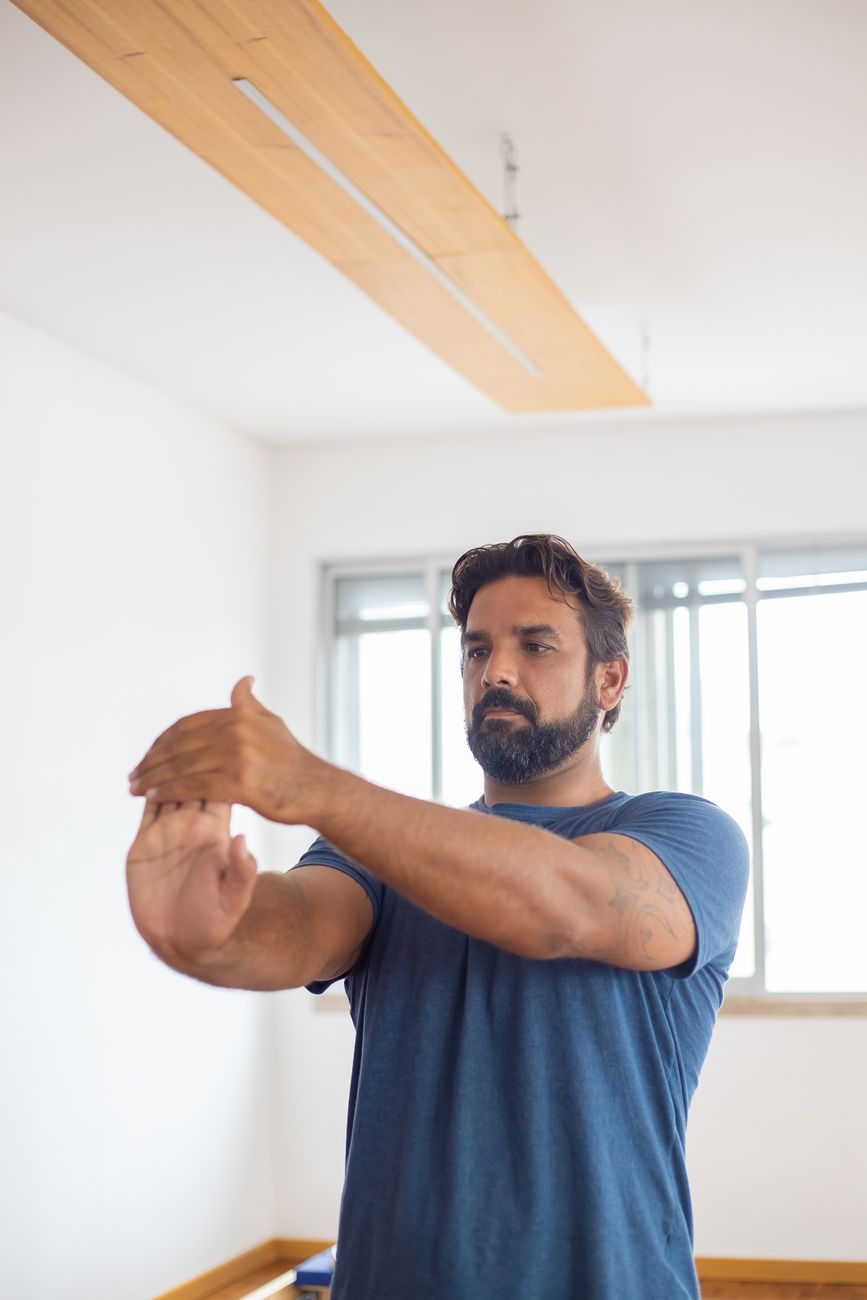
I also want to stretch out my palms to counter the forward motion of my wrists with extension of my hand. For some people, forming the palm out ‘stop’ motion with the hand, fingertips up, is enough. But sometimes I need a deeper stretch, so I do what the guy in the photo here is doing: I hold my fingers (with our without thumb) up with the palm of my other hand and extend my arm out in front of me.
Do not pull your fingers back past 90 degrees. If you are hyper-mobile in your joints (and even if you aren’t), do not hyper-extend your elbow (keep a slight bend to avoid strain).
(^also not me)
Banded Pull-Aparts
I use a light exercise band for this, but I also do the alternative below when I don’t have a band handy.
I grip the exercise band with my hands straight out in front of me, palms up. I maintain a neutral spine during this dynamic movement, meaning I don’t puff out my chest and crunch my lower back. I gently pull my abs in, keeping a neutral chin (I don’t dip it down, up, or jut it forward), and make sure I’m my shoulders aren’t rounded. I find it helpful to think of lights coming from my chest (nipple area) and shining them straight forward. Often people cue to lift your chest, and folks will shove their chest forward and up, crunching their lower back. We don’t want to do that. A ‘lifted chest’ is a very subtle movement.
From this starting position, I pull the band apart, until my arms are at a T (palms still up, and hands on either side of me). I focus on pulling my shoulder-blades together on my back with this motion, being mindful of my shoulders creeping up toward my ears. If I shrug while doing this exercise, I either stop doing the exercise, or try a lighter band (or no band).
NOTE: You can find videos demonstrating this movement on youtube if you search for palms up banded pull apart exercise.
The point of this exercise is to work the muscles between the shoulder blades while stretching the pectoral muscles (chest). Sitting hunching forward shortens the pectorals and can over-stretch back muscles, leading to poor posture, neck, shoulder, and back pain, and sometimes nerve issues.
No-Prop Necessary Substitute: Floor or Wall Rows
When I don’t have a band, I modify by standing with my back against a wall, bringing my arms into a 90-degree position, with my elbows against the wall. I use the motion of driving my elbows back into the wall to force my upper-body off the wall. If it’s too easy, I step out about a foot from the wall and do it again.
This can also be done on the floor. What I’m focusing on here is maintaining that same neutral spine (head, shoulder, back position) while drawing my shoulder-blades back. I’m essentially rowing using my own body weight. I don’t always feel the same stretch in the pectoral muscles, but I do (and should) feel ‘work’ in the back, between my shoulder blades.
Searching for floor or wall row will bring up photos and videos of this exercise.
I do these four days a week, typically in for 10-12 repetitions before I take a break and then do another 10-12 reps. It’s actually part of my warm-up for lifting too.
Cat/Cow: Seated or On All-Fours
I believe cat/cow is pretty universally known. Like with the last exercise, I really focus on beginning with a neutral spine before moving through the motion.
One variation I really like to do after I’ve done a few rounds of the usual cat/cow is what one instructor called ‘disco cat’, where you move your hips to one side as you do cow, and then flow through to the other side while moving into cat. Basically, I get funky with it to feel my spine articulating and moving.
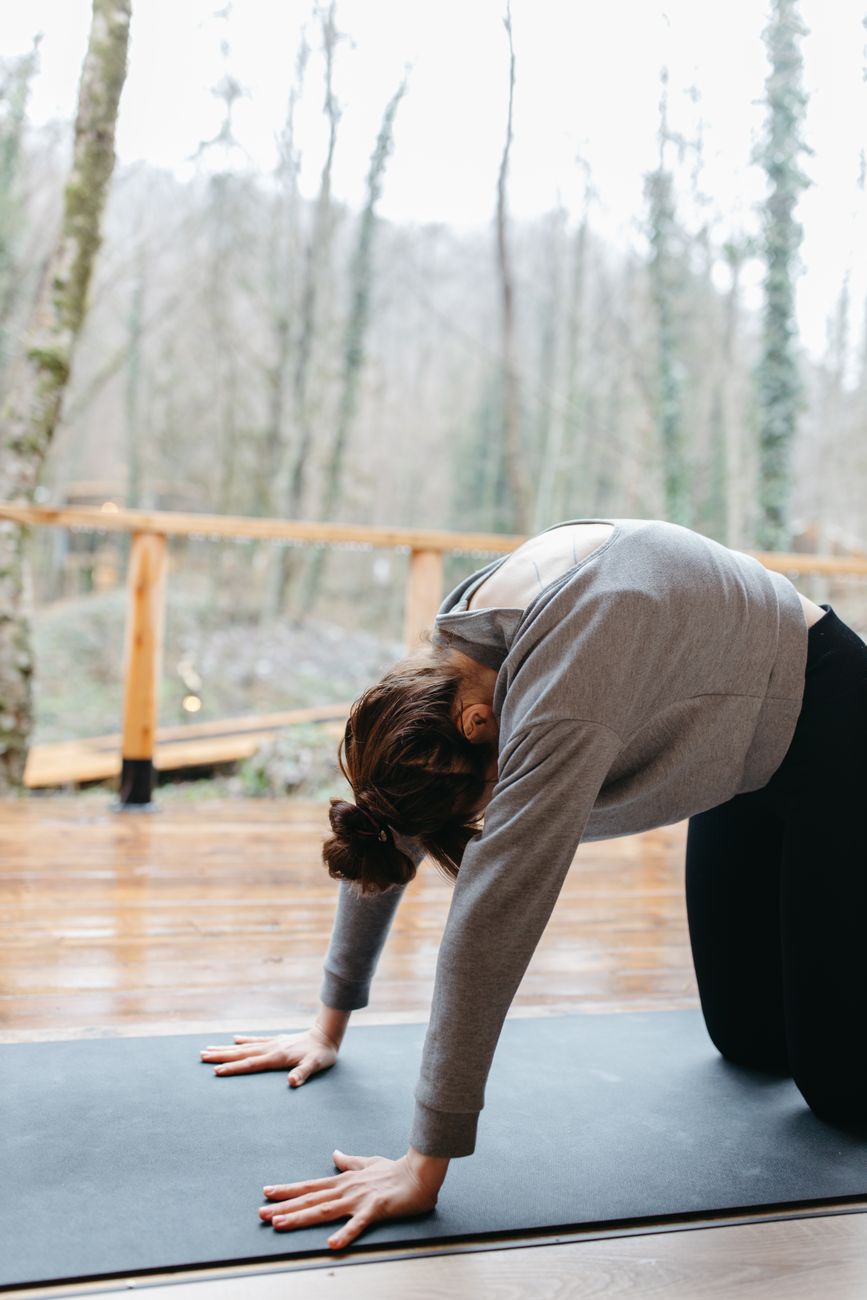
(again, ^ not me)
Standing Quad Stretch (for the hips!)
This can be done with one hand on a wall or piece of furniture for balance, or free-standing. While free-standing will help with balance and core-strength, that’s not my main objective for including this, so please use whatever you need to make sure you don’t fall over.
Important: DO NOT CRANK ON YOUR LEG! Be nice and gentle with your knees.
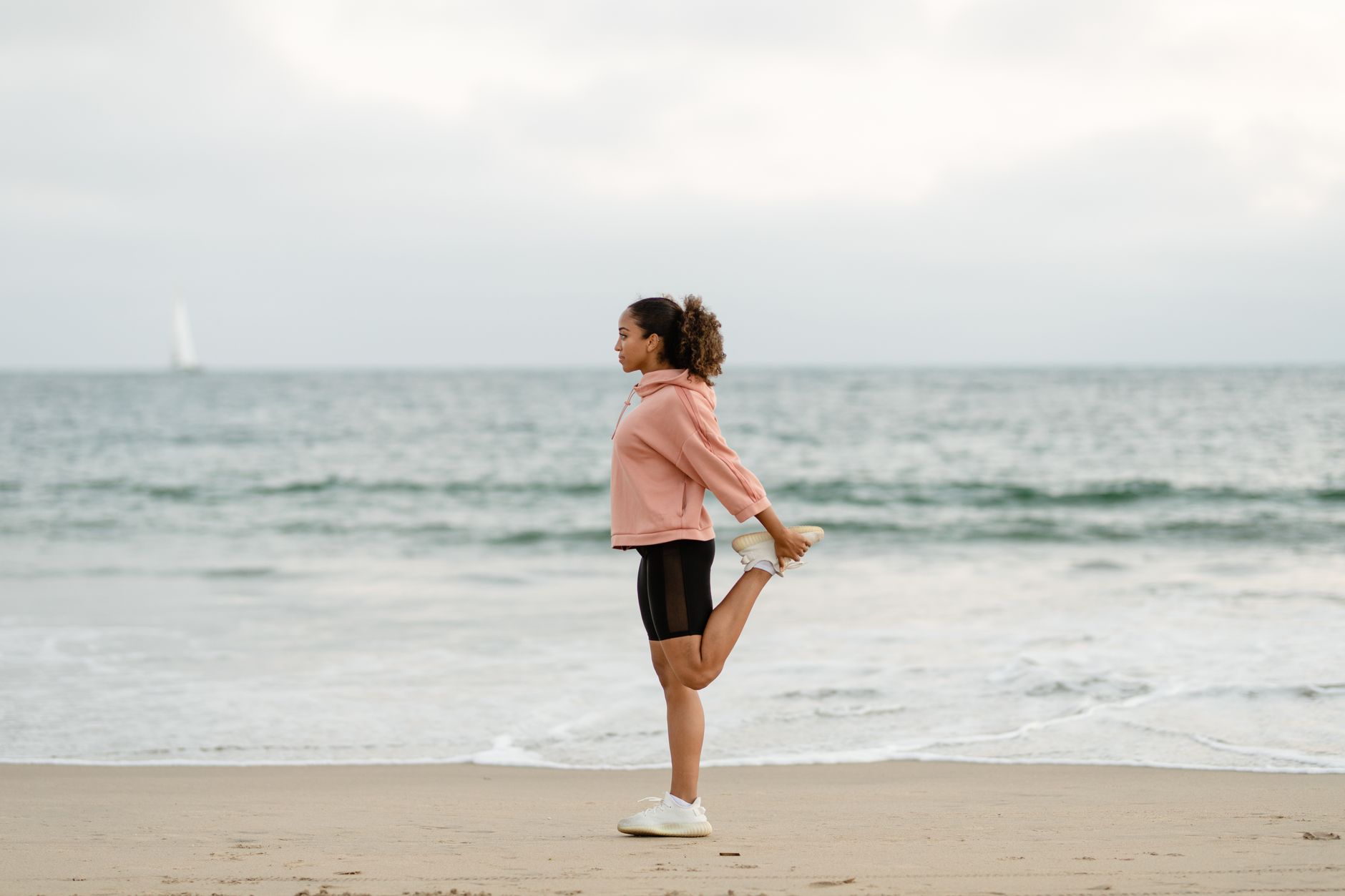
I’m not doing this to touch my foot to my butt. I’m doing this to release the tiny muscles in the HIP. Yes, the HIP. When we sit, those little suckers are shortened and overtime this leads to gait issues and leg and back pain. They’re tiny muscles and they do a LOT of work. I have other stretches I love for when I really need to get in there and release those guys, but this is a quick easy thing to do at your desk in a 10-minute break, so let’s dive in.
(and you guessed it, ^ not me)
Standing with my feet parallel and hip-width apart, I bend my left leg, bringing my foot to my hand but keep my upper leg pointed down to the ground (perpendicular to the ground).
TIP: If you can’t reach your foot while standing up straight, bring in a prop! If you’re able to bend your leg to 90 degree, you can place the top of that foot on a chair to hold the stretch. If you’re able to move your leg past 90, but can’t reach your hand, bring in a belt, strap, or even a hand towel to loop around your foot and hold in your hand.
FORM IS IMPORTANT: You want to stand straight during this stretch, not pushing the hips forward and cranking on your leg or your back (don’t back bend for this).
I bring the heel of my foot toward my backside to whatever degree I can without pain (it varies by day) and hold for 10-30 seconds, depending on where my body is at that day. If you’re doing all this and you don’t feel a stretch through the front of your leg and hip, try clenching your buttocks (not jutting your hips forward, just engage those glutes).
Side note for my body mechanics nerds: The glutes in this case are the antagonist muscle for the hip muscles we’re trying to stretch (hip muscles are the agonists). When you activate an antagonist muscle, it will trigger the release of the agonist muscle.
Not too secret bonus of this stretch: It also stretches the front of your shoulder cap and into the pectoral muscle for the arm holding your leg. You get a little bit of a chest-opener when you hold this position with proper form.
Assisted Variation (removes balance component): Put the hand not holding your ankle against a wall or grip a piece of furniture to stabilize yourself.
As I’ve written this, I’ve had a cat sitting in my lap. It’s time for us both to get up and move around.
Remember to be gentle with your bodies!


