This post is the second in an interview series discussing storytelling in different mediums.
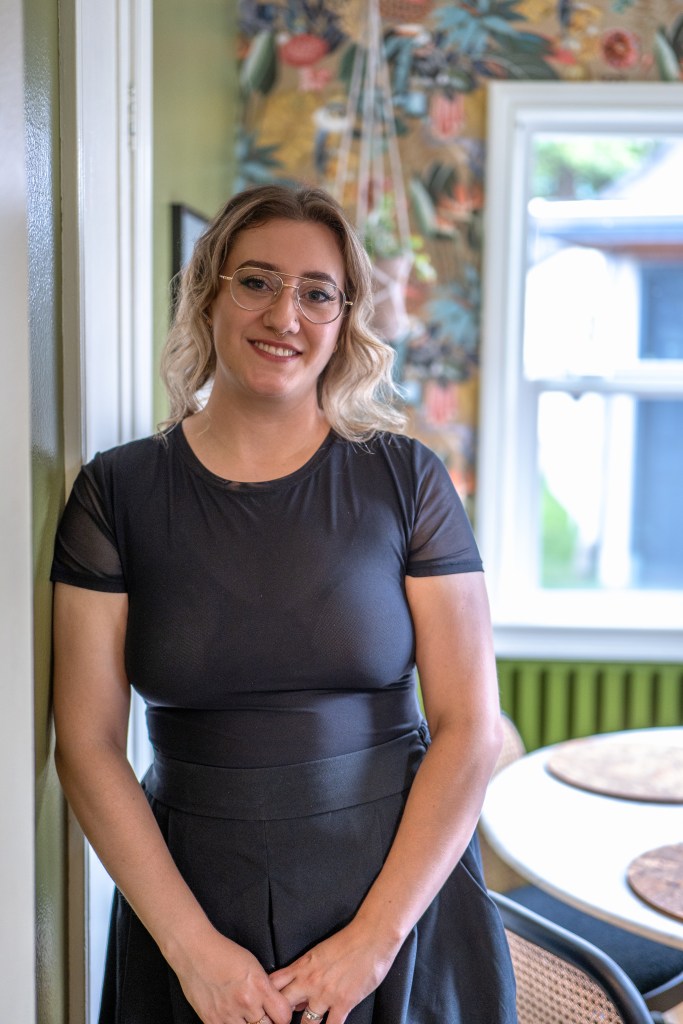
Jillian McCarty is the owner and lead designer at Jillian McCarty Interiors, with thirteen years of experience in interior design and an associate’s degree in the applied science of interior design.
I met Jillian six years ago through her partner, who I worked with at the time. The four of us (my partner rounding out the fourth) would meet up to climb and decompress at the end of the week.
Jillian, thank you for agreeing to discuss storytelling through interior design. Architecture and interior design have fascinated me since an early age. I seriously considered becoming an interior designer myself, entering college with the goal of transferring to the college of architecture from liberal arts. But then I found philosophy classes too engaging and here I am – no interior design degree.
How did you get into interior design – or what drew you to the study and field?
Jillian: You definitely have a great design eye! I have no doubt you would have thrived in the design world!
It’s actually kind of a silly story. When I was a kid, maybe about 10-12 years old I loved the show Trading Spaces on TLC. The moment I saw Hildy put records on an entire wall I knew what I wanted to do when I grew up.
Now, since then I have come to realize that Hildy was also an absolute menace and made some questionable choices but to me it was the moment I realized that I could use my creativity to build a career. I never wanted to be the “starving artist”, but I also knew that I was never going to end up in a field that didn’t allow me to be creative. I also always struggled in school, especially high school. I felt stifled and boxed into the science and math path that I was really not good at. So, when I finally started my design classes in college all of a sudden I was a straight A student! I knew I made the right choice!
I believe storytelling is about the human experience, creating a connection, and sharing a message to evoke an emotional response. When you’re working on a design, are you consciously thinking about these things too?
Jillian: That’s a great question! The answer has layers, I would say.
To me, the main story is the connection between a client and their home. Most of the time when someone hires me they aren’t connecting to their home for some reason or another. They may have aspects that they like but ultimately they want their home to be a reflection of who they are and how they live, but they don’t know how to convey that. So it’s up to me to create that connection and tell their story, almost on their behalf.
I think of it as maybe an autobiography or biography, where I’m taking information that I have gathered and turning it into something else that they can enjoy. For example I had a client that was really hesitant to hire an interior designer because they were worried that their home would end up looking like a model home. They wanted their home to feel deeply personal and when they had guests come over they wanted their guests to walk in and know who they were and what they were about just by looking at their living room.
Is there a main character, or cast of characters, in interior design work?
Jillian: Absolutely! My clients are 100% the main character in my designs.
When I’m designing a space I have to keep in mind that at the end of the day I won’t be the one living in the home I’m designing. So my clients should always be in the forefront of my mind. Ultimately it’s about them and how they use the space. It needs to function for THEM not for me or anyone else.
A dining room is a great example, on the day to day the family that lives in the home uses it everyday, being the main characters in the story, and on the nights when they entertain their guests are the secondary characters that pop in and out occasionally. I hope that makes sense.
Though honestly I’m not sure where I would put myself in this story, which is kind of hilarious, because I play a huge role in helping the main character get the story out, but I’m also not quite the NPC [non-playable character] in this situation either! I’m not sure, I’m taking recommendations on that one.
I love this idea of you essentially being a biographer.
This is not a field of writing that I have experience with, but I imagine it also involves taking all these pieces of a person’s history and finding a way to present them in a compelling way.
Like with biographies, you (the designer) take a person’s history (personal items) and translate it into something cohesive. And I suppose, depending on the biography, the new pieces you add are like the biographer’s historical context beyond the person’s immediate experiences that get added to a biography. It’s not filler or fluff (the design pieces and the written word) so much as external pieces that adds value and perspective and smooth out the story to enhance the reader’s (or guest or homeowner’s) connection.
Jillian: Exactly! Many times it’s a matter of introducing a client’s existing items into a design and making everything feel like it belongs and is cohesive.
But there are other times when I have clients that don’t really have anything and we are starting from scratch, which is a unique opportunity. In that case I’m interpreting what a client is telling me and turning it into something visual.
Most of my clients have inspirational images that help me understand what they want and it’s up to me to make sure that the end result aligns with what they want while also making the space feel like it tells their story with their own accumulated items and/or with new items.
What are some of the tools of the trade you use?
What instantly comes to mind for me is color theory and the rule of threes, which always makes me think about the rule of thirds for photography, but I digress.
Jillian: Definitely! Those are both great examples of design fundamentals and I would say those are tools that I use all the time without even thinking about it, especially when I’m putting together mood boards. It comes naturally at some point, which is fun that I’m finally at the point in my career where I can say that!
But also a big one is trusting my gut, I’m not sure if that qualifies but that is really a huge part of designing a space. If we want to get technical with things, I also rely heavily on my paint deck, various tape measures, and my floor plan and 3D software daily.
When I’m editing a project, I look for ways to add sensory details to pull the reader into the text and make them feel the story. I think about it as adding texture to the text.
What kinds of things are you thinking about when you add texture or sensory elements to your designs? Do you have a check-list you run through (mine is the five senses) for every project?
Jillian: Honestly, at this point it’s a gut feeling, which is a bit anti-climactic! However, I like the idea of using the five senses, so I may be more intentional about trying that in the future!
But typically in my creative process I try to visualize a space in my head first and then I’ll start looking for pieces that fit that vision one piece at a time, which I would say is a bit of story telling all on its own. But that also means that these sensory details get incorporated more or less organically.
Now, a well designed space also should allow your eye to be led around the space without really thinking about it; so these sensory details can also just be height variation, making sure things feel balanced, and adding texture or color to keep your eye moving.
For someone viewing a space for the first time, it is almost like doing a “choose your own adventure” version of story telling purely based on what they focus on first and how their eyes move around the space.
I’d imagine designing for others is similar to writing for someone else’s intellectual property: you’ve got a set budget, timeline, and the creative process is much more collaborative.
How does your process change when you’re designing for yourself versus for a client?
Jillian: This is a great question because how I design for myself is completely different than when I’m designing for a client, which is kind of hilarious. I have even joked that I need to hire an interior designer to design my home because I’m pretty chaotic and can’t make decisions for myself!
When I’m designing for clients I more or less have a set creative process that I stick to. First we have a consultation, where I sit down with clients, go through what the process looks like and take measurements and before photos. Then I go back, draw up their floor plan and review their inspirational images. Then I can start creating a mood board for them. It’s a good balance of creativity and following a process.
But when I’m designing for myself all of that kind of goes out the window, there isn’t really anyone to interview. I see all of these fun spaces that I get to create for my clients, but I’m too inside my head that I can’t always stick to a good timeline.
On top of that I generally have a tighter budget than most of my clients so that is also a factor. I, of course, have expensive taste so finding that balance inside my own home can be tricky. I have even told my husband while designing a room in my home that this would be so much easier if this project was for a client. I would know exactly what they need and where to get it, but I kind of stump myself sometimes and get tangled up in my own creative process. It’s almost like I’m lost without my clients!
I’m asking everyone in this series for their top three book recommendations. This doesn’t need to be favorite-books-of-all-time, but rather what would you, today, tell people they should go out and pick up immediately?
Jillian: I love this question! I’m pretty basic when it comes to the books I read, so my list won’t be particularly sophisticated! And it also takes me FOREVER to finish a book even if I’m enjoying it, it’s just how my brain is, I have accepted it.
I really enjoyed The Kiss Quotient by Helen Hoang. This one was probably my first introduction to the smutty romance genre but it gave me all of the feels. It was also an amazing peek into the mind of someone who is neurodivergent while sort of dating. I say “sort of” intentionally, but if you want to know what I’m talking about you will just have to read the book!
If I was speaking to someone who is a fan of horror I would highly recommend From Below by Darcy Coates. This book does such an amazing job of building up tension and anxiety and I talk about how much it gave me the creeps with anyone who will listen.
I remember you telling me about this book and how it seemed really well-researched, specifically on the diving information. I believe I got caught up telling you about a non-fiction book called Into the Planet that talks about cave diving. So if folks read From Below and want more creepy diving reads, check out that one too.
Jillian: My last one is a recommendation from you, which is Neon Gods by Katee Robert. When I was at my wits end from another romance novel that was just not delivering on the steam factor, you came in clutch with this one. So to anyone that feels bored of the typical romance novel this one is a go-to that I would tell anyone to go pick up!
Ah yes, Neon Gods! I end up recommending this a lot to folks who want a steamier read that isn’t pure erotica, and who also like fantasy elements.
Thank you so much for taking the time to talk about storytelling with me. If folks want to follow you, where should they do that?
Jillian: Thank you so much for having me! This was really fun! I have not really had a chance to think about my job this way so it was a cool exploration for me!
I am the most active on Instagram: @jillianmccartyinteriors so feel free to give me a follow or reach out there!


