This post is the first in an interview series discussing storytelling in different mediums.
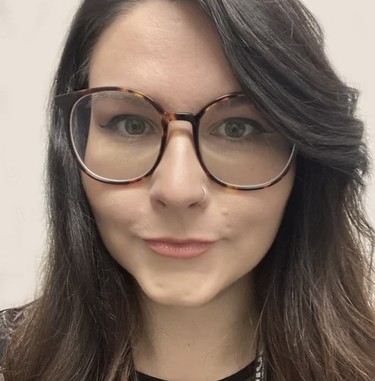
Alice Rendell has 16+ years experience working in video game development. She’s a narrative design consultant with a specialization in narrative systems. Her work has appeared in Star Wars: Outlaws and Avatar: Frontiers of Pandora, she regularly guest lectures with Sweden’s game school The Game Assembly and works with their online education platform Gamedev Station.
You can find a full list of her credentials, press, and even an online course on her website at https://www.alicerendell.com/.
I met Alice in 2017 when we were both working at Massive Entertainment in Malmö.
Alice, thank you for agreeing to talk about storytelling in video games today. Narrative doesn’t play a critical role in all video games, but storytelling is a part of most games. Having worked with and in narrative departments at game studios, I know that game writing and novel writing are very different beasts. But we’ll get to that.
First, I’m curious to know if you see a difference between narrative and storytelling when it comes to video games.
Alice: Absolutely a difference. I think the main one is something I call the Protagonist Problem.
In linear media, like books and films and TV shows, you watch your characters on screen and you root for them, you want to know what choices they make. That’s why you watch or read a story until the end, because you want to see what happens to the character. But in video games, you are that protagonist. You don’t have that suspense or that hook of ‘ooh what is this character going to do in the end?’, because you are the character and you’re making those choices. It’s one of those fundamental linear storytelling rules that just can’t be applied to games at all.
What do you do to create that tension for the player, since you don’t have it in the same way? I’m assuming that you create tension somewhere else in the game.
Alice: Yeah, you have different tools instead. The main thing—and this is going to sound a little cliché so forgive me—is that it’s the journey that matters. The journey of that story is not the beginning, middle, and end. Most players won’t even get to the end. Most players don’t finish games.
I’m guilty of that.
Alice: Me too. Even when it’s your own industry, you’re guilty of it.
You have to make that journey be really really memorable. You have to make either the characters that you’re meeting really fun, so you want to keep meeting them over again, or meet more and more of them. Baldur’s Gate is a great example of that; it’s a great cast of characters you want to spend time with.
Or, you make the playable character a lot of fun, like Nathan Drake in Uncharted. I just want to spend time with this character, and that’s enough. That’s the journey being fun. Then you can still have your story, but it’s the gameplay and the experience of that story that becomes more important than the story itself.
What is your creative process for making game narrative, or does it vary by game?
Alice: Everything varies by game. All your best practices kind of get thrown out with each game because they’re all so different. But there is a core tool that I like to use. I’m currently calling it the Core Pillars Triangle. Basically, the idea is that there’s three main pillars of your game, which need to interact and support each other: The genre of your game, the World or Setting, and the Role that you have as a player in that universe and genre.
When all three are working really well, that’s where you get your narrative and gameplay synergy. So, an example with Witcher III: it’s an action RPG, set in this medieval fantasy world, and your role is as a monster hunter—these drive every bit of gameplay you do. It’s your reason for doing most of the combat, because you’re a hunter. It’s the reason NPCs ask you to do it, because you’re the only one with the skills to defeat monsters. Then you have your Witcher senses and your Witcher skills because of who you are and your role in that world.
That’s what I like to start with. I want to make sure that those three pillars are completely complementary to each other. Because if they are, it means that every game system that you create will be coherent with both the narrative and the gameplay.
I hadn’t thought about how genre plays into this. I know what genre I’m going to be writing in and I move from there.
Alice: If you change the genre, then you’d make different decisions for the gameplay and different decisions for the role, and maybe even the setting. Ideally the three are together and if you change one, it domino-effects the others. So nothing is in isolation.
So often, in games, narrative feels like it comes in pretty late in the development process. I’m guessing that early on the vision for a game’s feel and messaging is kind of handed to the narrative team, and they’re basically told, make this engaging.
Alice: Yeah, 100%. It’s what they call the narrative wrapper. You’ve got your game, just wrap some narrative around it and then off we go. But players feel that disconnect. They feel when it’s an afterthought and not been there from the beginning.
How does writing for games, specifically storytelling, differ from writing short stories or novels? Are there special considerations or limitations that you don’t have with your other professional writing?
Alice: For game writing, ideally, you’re trying to tell the story through mechanics first and foremost. There’s probably a hierarchy there, I’ve never worked it out, maybe I should. But gameplay mechanics first, then world and the environment and UI—if all of that is telling a story and doing the heavy lifting of that narrative, then you add text and dialogue and all those kinds of things.You’ve got a much bigger toolbox for storytelling than you do in other media. And you want to be using those tools as much as possible, because that’s why games are cool. They’ve got that opportunity, which is awesome.
In terms of the actual writing, I would say that the two biggest differences are word count and time for iteration. Word count is a lot more strict for script writing, cutscenes, and dialogue. Players are pretty impatient, especially when you’re asking them to be passive in a predominately interactive environment. You’ve got to get to your point very quickly. There’s that restriction.
The other is the time for iteration is very short, or even nonexistent. Because of production and deadlines, and the way everything gets built, sometimes it takes awhile to see your cutscene or writing in the game, and even longer to then iterate on it to a quality level. We all know that good writing is lots of iteration.
I would honestly say that’s one of the main reasons that narrative gets such a bad reputation with games. There are amazing writers, I’ve worked with so many. Unfortunately, the time for iteration is just not there to make it to the same quality levels as other media.
Your specialization is narrative systems. What does that mean?
Alice: I didn’t know that’s what I was. I started in game design, which I loved. But then I also loved the stories and the narrative side of games. So I became a narrative designer. But that didn’t feel quite right either, because it was very content focused. But then I worked on Star Wars: Outlaws, and they wanted someone who was a game designer who specialized in narrative and could be the bridge between the narrative and game design teams. They needed someone who spoke writer and also spoke game designer, and could kind of translate between the two. That’s what I did. I was like, okay this is where I feel my niche is.
Star Wars had this reputation system where because you were this scoundrel of the underworld of Star Wars, you had to kind of play the factions to get ahead. So there was a trust relationship system, and that told you so much about the world before you even get to a cutscene. You have to double cross people and align with one whilst annoying another, and that balancing act, it’s very fickle, everyone stabs each other in the back—having a system do all that work frees up space for cutscenes to just be about the emotional resonance of the story and what the characters are doing.
I love when games use tools like that to subconsciously give you story.
Alice: Yeah, and there’s so many—UI can do a lot of it. If you look at the Fallout games, your main in-game UI is your watch, your vault-tech on your wrist. Audio goes a long way too. The way a character moves as well. If they’re a soldier, there’s a lot of precision. They move very purposefully. If you were like Kay in Star Wars, you’re very scrappy, you’re more free. She would punch people in the animation and then go ‘ow’. There’s a lot of narrative room there with UI, animation and audio.
We’ve talked before about creating under pressure, whether that be work deadlines, personal reasons, or the current political climate. I’ve also talked on my site about professional burnout. There are so many challenges to overcome when creating any type of art. How do you keep creating through difficult times, particularly when you’re creating for someone else and not yourself?
Alice: I don’t know that I’ve 100% worked that out yet, but I’m better than I used to be. I think living in Sweden helps. A lot of work-life balance. Lots of vacation. Lots of saunas. Which has had a good effect on me in that regards.
But I think the main thing is just be kind to yourself. I know that’s a bit of a cliché, but being creative is hard. It’s hard to sit down from 9-5 everyday and be like “I am going to be creative.” There’s ebbs and flows.
The thing that gets me into a spiral is when I’m really hard on myself for not producing in a way I want to produce. And going, “Today I was not as creative as the goal I’d set for myself.” And just learn to take a breath and say that’s okay because tomorrow you will be, or maybe you won’t, but you will be eventually because you know you can. It’s really hard. I’m still working this out.
One tool that did actually help me was after I had my burnout, I started to catch myself if I ever said “I should do this”. I would analyze it, and say Do I have to do this? And if so, why do I have to do it? And can we turn that should into an I want to do this?
I was very bad at saying no, and I would take on too much. Saying, “ I should be writing, I should be working on this right now. Or I should be writing more. I should be going to the gym more. I should be doing this more.” It’s like, no, should is a trap word. Get it to an I want. I want to be going to the gym more because it makes me feel better afterwards.
Yes, should is a shame word. It’s a ‘you’ve messed up’ word, I feel. And being able to get to the root behind why you think you should. Usually it’s a “I want to because…”
Alice: Yes, but you stop at should and you forget the rest.
You know I love talking about books. I’m asking everyone in this series for their top three book recommendations, so feel free to tell me that too, but what I really want to know is what are your top three video games? And yeah, I know that’s a horrible question for a game developer. Doesn’t need to be of all time. Just right now, what’s caught your attention and sucked you in, or features amazing storytelling, or really anything that makes you want to scream to the world about it?
Alice: One of my staple example games that I go to for great narrative is Papers, Please. Basically you’re a passport inspector at a country’s border checkpoint, which could be very boring, but it’s set in war-torn countries, there’s people who are maybe immigrants trying to get into the country, or people who have been separated from their family and there’s a lot of political undertones to it as well, and you have to decide who you let in or not. You have to check all their documents to see if they’re the right ones to be let in, and if you don’t you get docked your pay, then you can’t feed your kids or keep the electricity on in the house. So it gives you these huge dilemmas of someone not having the right documents, but are fleeing a war and you want to let them in. And you know you’re going to get docked your pay if you do.
I already feel stressed just listening to this.
Alice: I know. It’s honestly wonderful. It’s such a good game. Because how many games are set in a war-torn land and you’re a soldier? This is why role—the pillars, I’ve come full circle—this is why role is so important. Because that role, border check-point inspector, makes for a completely different gameplay and story than if you were a soldier. So I think it’s such a good example of that.
Something recent in the last few years was Dredge. It’s a Cthulhu-style game where you’re a fisherman. It’s got some good narrative systems in that you’re limited in your inventory space, so you’ve got to think carefully about where you’re going, and what you’re bringing, and how often you stay out. There’s also some cool creepy Cthulhu stuff, which appeals to my gothic heart.
I can’t not mention Final Fantasy VII because it’s my nostalgia, childhood game that made me want to be a game designer.
What about it made you want to be a game designer? Was there one specific thing, or just the overall game?
Alice: It was the characters and the world. I never played a game that was that huge. You start off in the city and you’re like “oh, okay, this game was just going to be set in the city, that’s great,” but then you leave the city and there’s a whole open world—and I’m like nine or ten when I’m playing this, and my mind was blown that you could have an open world game.
That game made me cry and I didn’t realize that I could fall in love with characters so strongly and deeply. And I was like, “ah! I want to make players cry.”
Every writer: I want to make someone cry.
Alice: Yes, exactly. For books, there’s too many. But I have authors I love. Angela Carter. I love pretty much everything she writes. Same with Shirley Jackson. We Have Always Lived in the Castle—I love that soft creepy horror. In more modern fiction I like N.K. Jemisin, she is great. Choosing singular books is hard.
Yeah, it’s a cruel question. Thank you so much for taking the time to talk about storytelling with me. If folks want to follow you, where should they do that?
Alice: My website: alicerendell.com.


