I’ve taken to listening to audio books on my drive to and from work. It keeps me a little more zen when traffic is bad.
When picking out audiobooks for my commute, I keep the following things in mind:
1) Length – know how long you have
I’m checking audiobooks out from my public library. Often times I’m picking books that are still in pretty high demand, which means that I have to get the book read before the due date. Since I’m driving to work three days a week and not five, and typically my daily listening time is 60-75 minutes, I can’t be downloading books much longer than 300 pages.
I listen at 1.2 speed, which typically sounds like normal speaking speed to me. Whenever I’ve attempted 1.5 speed in the hopes of finishing a book sooner, I find the pace creates tension in my body. Suddenly I’m clenching the steering wheel instead of relaxing into my drive.
2) Subject matter matters
I do best with non-fiction when I’m driving. I can listen to what they’re saying and digest the content without having to divert my entire attention away from the road to imagine some lush fantasy world, complicated alien characters, or a whole list of made up names and locations. The few times I’ve been able to listen to fiction books, they’ve had a short cast of characters and were set in recognizable locations. Essentially, not a ton of imagination was required to follow the stories.
There’s also typically less dialogue to follow in non-fiction. If it’s a fiction book with multiple characters speaking but only one voice actor, I can find myself struggling to follow who is speaking and when.
3) The narrator’s voice and cadence can make or break a book
I tend to prefer when the author is reading the book. Because I mostly listen to non-fiction, I like to hear the way the author would read the words they actually wrote. I get more of their emotion, when it’s emotional content, or a deeper sense of their enthusiasm for their subject matter.
That’s basically it. Easy-peasy for filtering the TBR list on The StoryGraph.
Now for the recommendations from audiobooks I’ve read so far this year.
Unprotected: A Memoir – Billy Porter
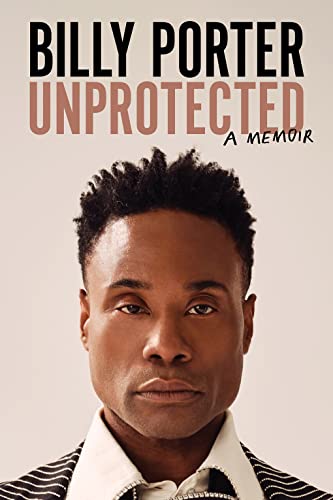
I honestly didn’t know much about Billy Porter before picking up this book other than some random articles and headlines I’d seen online. I found this memoir to be raw and timely. Although, it was a little strange listening now when folks have emerged from quarantine because the book was written during quarantine, and reading through that level of pain and anxiety shot me back a few years in an instant.
Still, despite the emotional grip of the book (there’s far more in there to bring out the tears), I didn’t want to stop listening. Billy Porter holds focus, even when only a voice coming through my car speakers.
The Soul of an Octopus: A Surprising Exploration Into the Wonder of Consciousness – Sy Montgomery
I’ve had this on my list for awhile now (it’s been out since 2015) and I’m so glad I finally read it. Sy Montgomery made me want to go see the octopus at the Seattle Aquarium for the first time since 2019. Unfortunately, she also made me wish that I could touch the octopus, and that it could live free, but going and seeing would have to be enough. I found myself excitedly telling friends about new facts I’d learned from the book.
When I did make it to the aquarium, I was surprised to find that Sy Montgomery had fundamentally changed the way I saw every fish and animal at the aquarium, not just the octopus.
Read this book to feel your world expand. But also come prepared with tissues. I definitely sat in my work’s parking garage and cried a couple of times.
Remember: The Science of Memory and the Art of Forgetting – Lisa Genova
It’s funny to go into a book thinking you know a little something about the subject matter, but knowing you know next to nothing. Parts of this book were tedious for me because I have had exposure to enough research on human memory and psychology to know the basics. Other parts of this book offered entirely new insight that, get this, made me feel deeper compassion for people in my life who have caused me a lot of pain over the years. It was a bit of a journey, is what I’m saying.
If you haven’t studied the research on eye-witness accounts and the complete unreliability of human memory, this book will likely be eye-opening.
But, I think this book is also comforting in some ways. It has a section that reminds us that to remember we must forget, and that forgetting is normal. As someone who has close family suffering from memory loss and early signs of dementia, it’s nice to know that struggling to find a word when I’m exhausted, or completely forgetting something at the grocery store is not an early warning of something horrible to come, it’s just a lack of focus. Lisa Genova tells the reader that to remember something, you have to first pay attention. It was a great reminder to slow down and actually experience the day-to-day.
Conversations with People Who Hate Me: 12 Things I Learned from Talking to Internet Strangers – Dylan Marron
I wanted to nominate this as my book club book, but I was getting side-eye from the other members for having already picked ‘downer’ books the last two times. Now having read Conversations , I’m bummed I didn’t pick it for book club. It was absolutely not a downer, not overall. Overall, it was hopeful. It was insightful and made me think about what kinds of conversations might be possible with people I’ve discounted as unreachable at this point in my life. It also was a little sad at times. But I found myself laughing more time than not. And the sad parts were reminders of work to be done rather than giving in to the feeling of helplessness that the modern era of social media and constant news updates can bring on.
Charming and worthy of discussion, read this with friends, or maybe some folks you’d like to talk with but aren’t sure where to begin.

 A. K. Hudson